
Description
The enzyme behind the interest
To understand 5-Amino-1MQ, it helps to start with nicotinamide N-methyltransferase, or NNMT. This enzyme transfers a methyl group to nicotinamide, a form of vitamin B3, and in doing so it consumes S-adenosylmethionine and affects the pool of nicotinamide available for making NAD+. NNMT is expressed at high levels in fat tissue and liver, and research in the 2010s linked higher NNMT activity in adipose tissue to metabolic changes in mouse models. That made NNMT an attractive target for inhibitor research.
The compound
5-Amino-1MQ (5-amino-1-methylquinolinium) is a small, membrane-permeable molecule developed as a selective NNMT inhibitor. It is not a peptide. In cultured adipocytes, it has been reported to reduce NNMT activity and raise intracellular NAD+ levels, and in diet-induced obese mice it has been studied for its effects on fat mass, adipocyte size and related measures. As always, these are findings from laboratory systems.
Bottle specifications
- Format: capsules
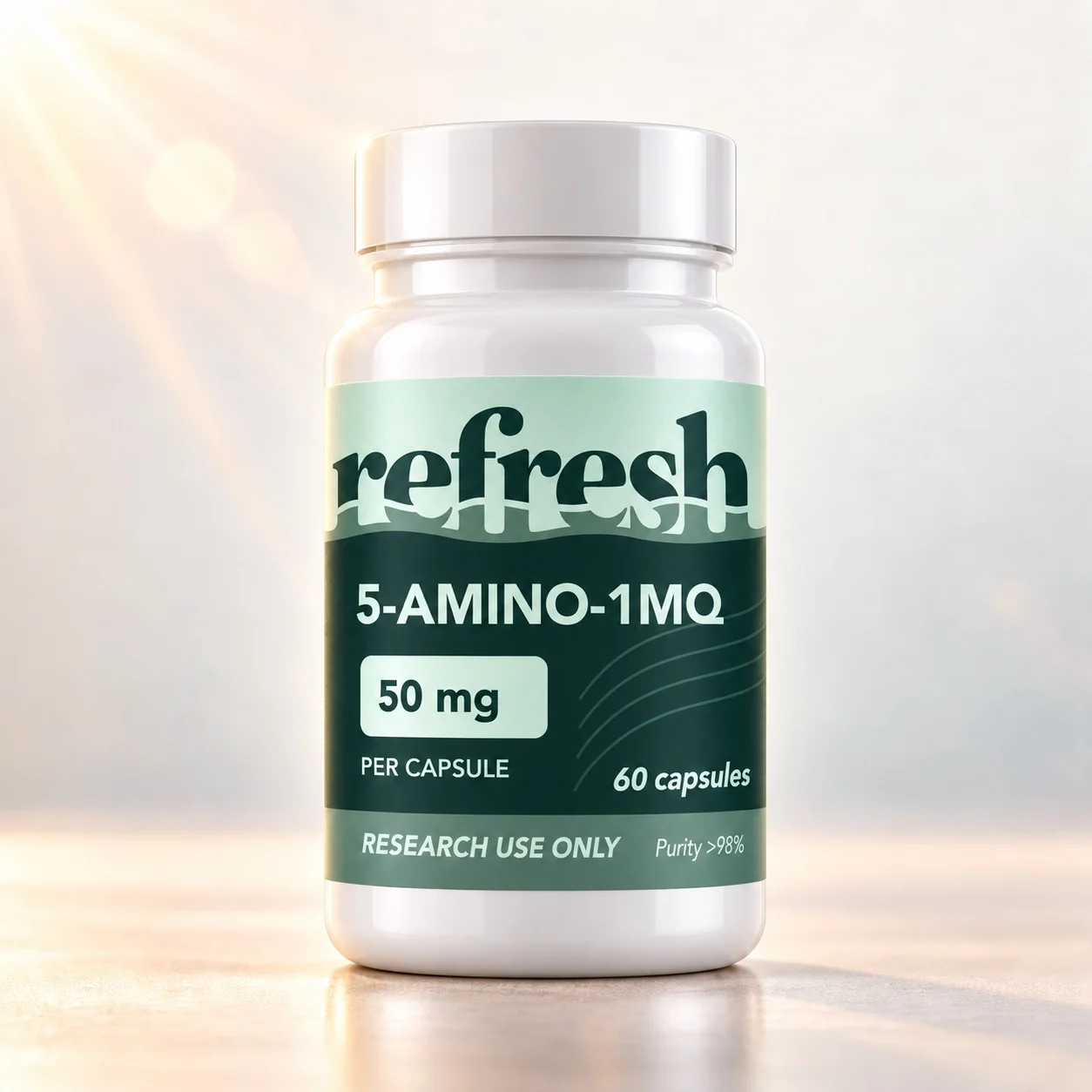
- Labeled quantity: 50 mg 5-Amino-1MQ per capsule
- Count: 60 capsules
- Compound type: small molecule, NNMT inhibitor
Also available as a vial
For labs that prefer to prepare their own solutions, 5-Amino-1MQ is listed as a vial in 10 mg and 50 mg options.
Related research materials
Because NNMT activity is tied to nicotinamide and NAD+ metabolism, some projects pair 5-Amino-1MQ with NAD+, which we carry as a vial and as a liquid spray.
Storage
Store the closed bottle in a cool, dry location away from direct light.
The quinolinium core of the molecule carries a permanent positive charge, a feature the original researchers considered when designing an NNMT inhibitor that could still enter cells. It is a small but telling example of how structure shapes what a research compound can be used for. Related quinolinium analogs were screened alongside it in the original work.
Verification
Refresh Research has each lot analyzed by a third party. Whenever you want to confirm a bottle, its lot code is your key to the certificate posted under COA / Lab Reports.
For experimental laboratory use only, never for personal use.
