
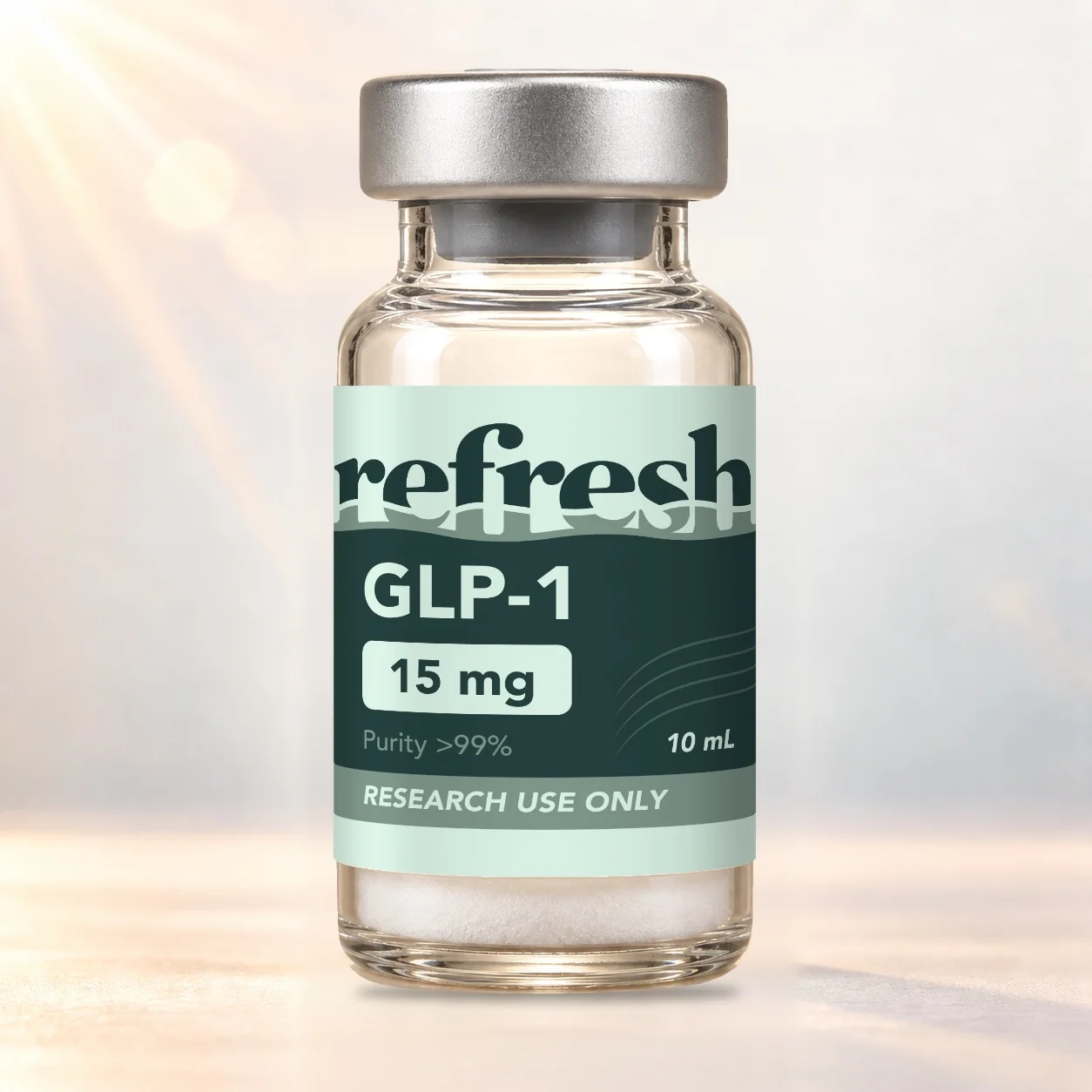
Description
Comparing across the GLP classes
Refresh Research lists three incretin-class research peptides, and this 15 mg GLP-1 vial is a convenient anchor for comparing them. A quick outline of how they differ:
- GLP-1: acts at one receptor, the GLP-1 receptor.
- GLP-2: a dual agonist at the GLP-1 and GIP receptors.
- GLP-3: a triple agonist that adds the glucagon receptor to the other two.
Comparative studies in cells and rodents have used this kind of ladder to ask what each additional receptor contributes to measures like insulin output, hepatic fat handling, energy expenditure and food intake. The single-receptor compound is the reference point everything else is measured against.
This vial
- Format: sealed glass vial
- Labeled quantity: 15 mg
- Physical form: freeze-dried powder
Matching quantities
GLP-2 is also offered at 15 mg, and GLP-3 is available at 15 mg among its options, so a three-way comparison can be built from identical vial sizes. That removes one source of variation when preparing stock solutions.
Why some labs prefer 15 mg
A study that started on a 10 mg vial sometimes needs a little more headroom for replicates or an extra control group. Fifteen milligrams provides that without the commitment of the 20 or 30 mg sizes. Keep the vial sealed, cold and dark until use, and divide reconstituted solution into aliquots if it will be used over several sessions.
When stock solutions for all three classes are prepared on the same day, using the same diluent and the same volume, the remaining differences between your groups are much more likely to come from the compounds themselves. That is the practical payoff of matching vial sizes. Recording the diluent lot alongside the peptide lot is a small habit that pays off when comparing classes.
Certificates
Available COA / Lab Reports describe the samples and lots printed in each document. A supplier report does not verify a different Refresh Research stock lot without a documented match. Compare the compound, format, strength, and lot before relying on a report.
This vial is a laboratory research material, not a consumer product.
